Software archaeology / Dynamix / 1994
Exhuming Earthsiege.
Heavy machinery, a cockpit full of instruments, and a war fought one salvaged part at a time. We opened up the DOS game to see what makes it tick.
Original geometry, textures and equipment.
Rendered in our browser inspector.
A little context
Before Tribes, there were HERCs.
Metaltech: Earthsiege is Dynamix’s 1994 combat simulation, published by Sierra On-Line. You pilot a walking war machine called a HERC against the Cybrids, lead a small squad and try to bring enough usable metal home for the next mission.
Behind those chunky models is a detailed combat simulation. Limbs take damage separately, weapons can be swapped, and the equipment you recover helps your squad survive the next mission. We have been tracing those rules through the game’s data and executable to build a native reconstruction.
Open the hangar.
Recovered from the original DOS data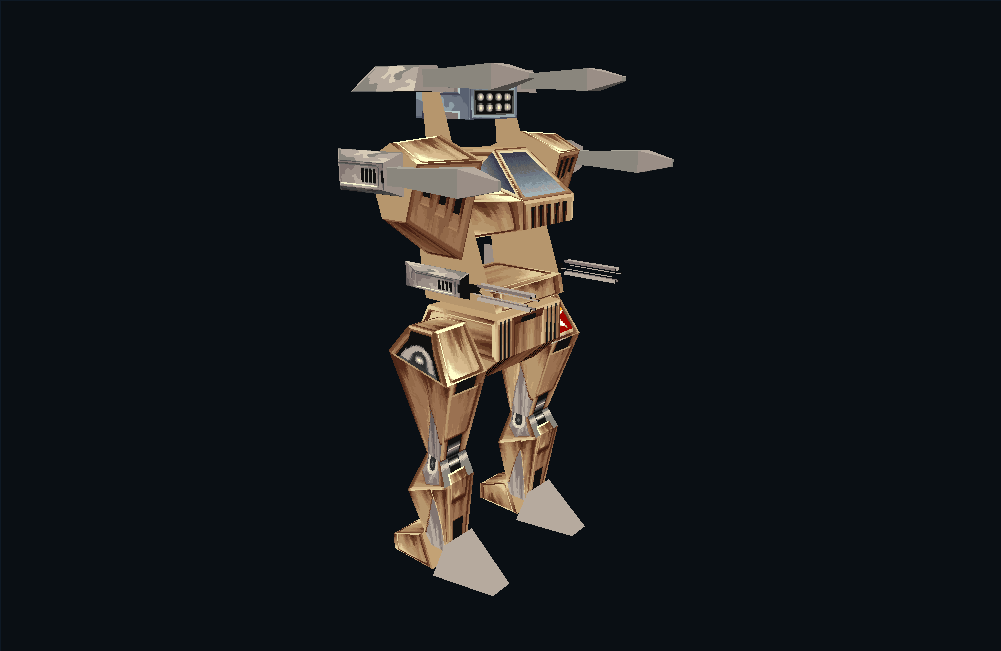 Model gallery
Machines with moving parts
Walk a HERC, change its equipment, turn its torso, or inspect what remains after a hit.
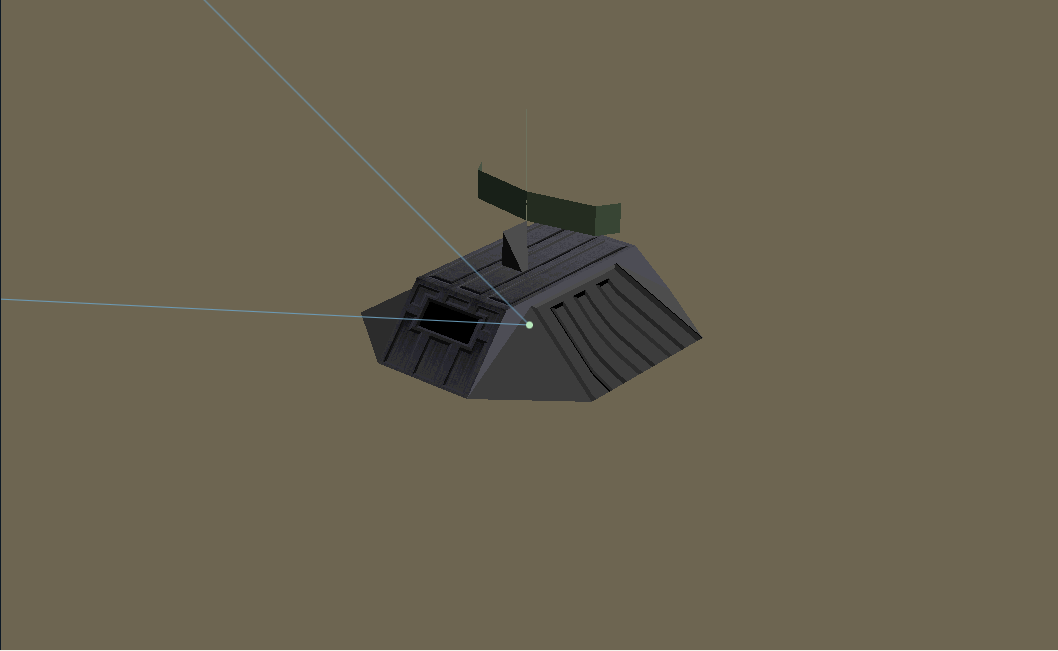 Mission atlas
Explore a battlefield
Follow the routes, find the listening posts and see how the original launcher puts a mission together.
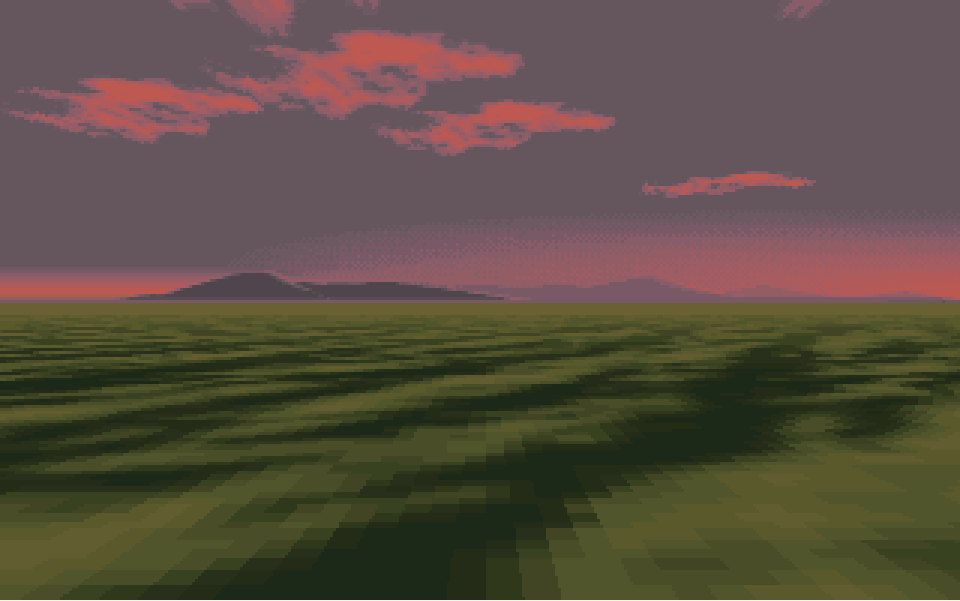 Sky & weather
Watch the sky change
From clear desert daylight to an urban night, compare the original sky drawing and unroll the whole horizon.
What turned up
A vegetable, a possible signature, and a very strange radar.
A command called -eggplant looked promising. A pattern at the edge of a map looked like somebody’s initials. And a handful of stubborn pixels led all the way into the old game’s memory allocator.
Read about what we found in the investigation. You can also listen to the soundtrack’s FM and sampled percussion, or follow the original-versus-reconstruction comparisons.
Inside the renderer
Every pixel has a history.
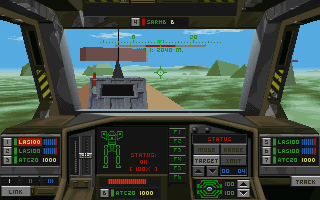
Watch a HERC appear one polygon at a time. Follow its vertices through fixed-point transforms, palette shading and VGA memory in How Earthsiege draws a frame.
Inside the combat simulation
Worth more in pieces.
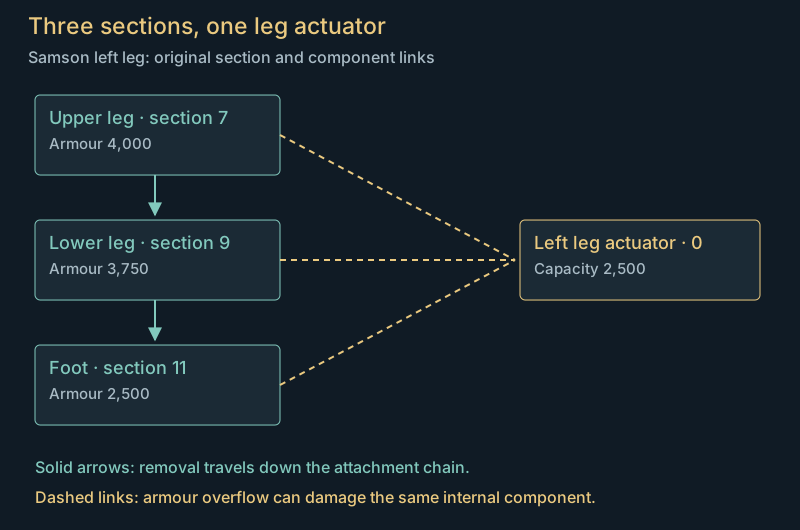
A foot shot can stop a HERC whose leg still looks intact. Follow armour, internals, missing weapons and recovered metal in Taking a HERC apart, our guide to the damage model and physics.
Decisions, missions and music.
All engine articles →AI & squad behaviour
How the HERCs choose a fight
What a machine knows about its enemies, how it chooses a target and weapon, and when it decides to withdraw.
Missions & campaigns
Building a battlefield
Follow authored mission data through random choices, campaign history, activation triggers and the return to the hangar.
Reverse engineering
Checking a reconstruction against the original
Controlled experiments, recorded missions and the few wrong pixels that led into the original memory allocator.
Music & sound drivers
Inside Earthsiege’s soundtrack
Hear the FM arrangements and sampled drums, follow a combat music change, and investigate the missing MT-32 melody.